

Difference Between Stress and Anxiety: How to Tell What You’re Feeling
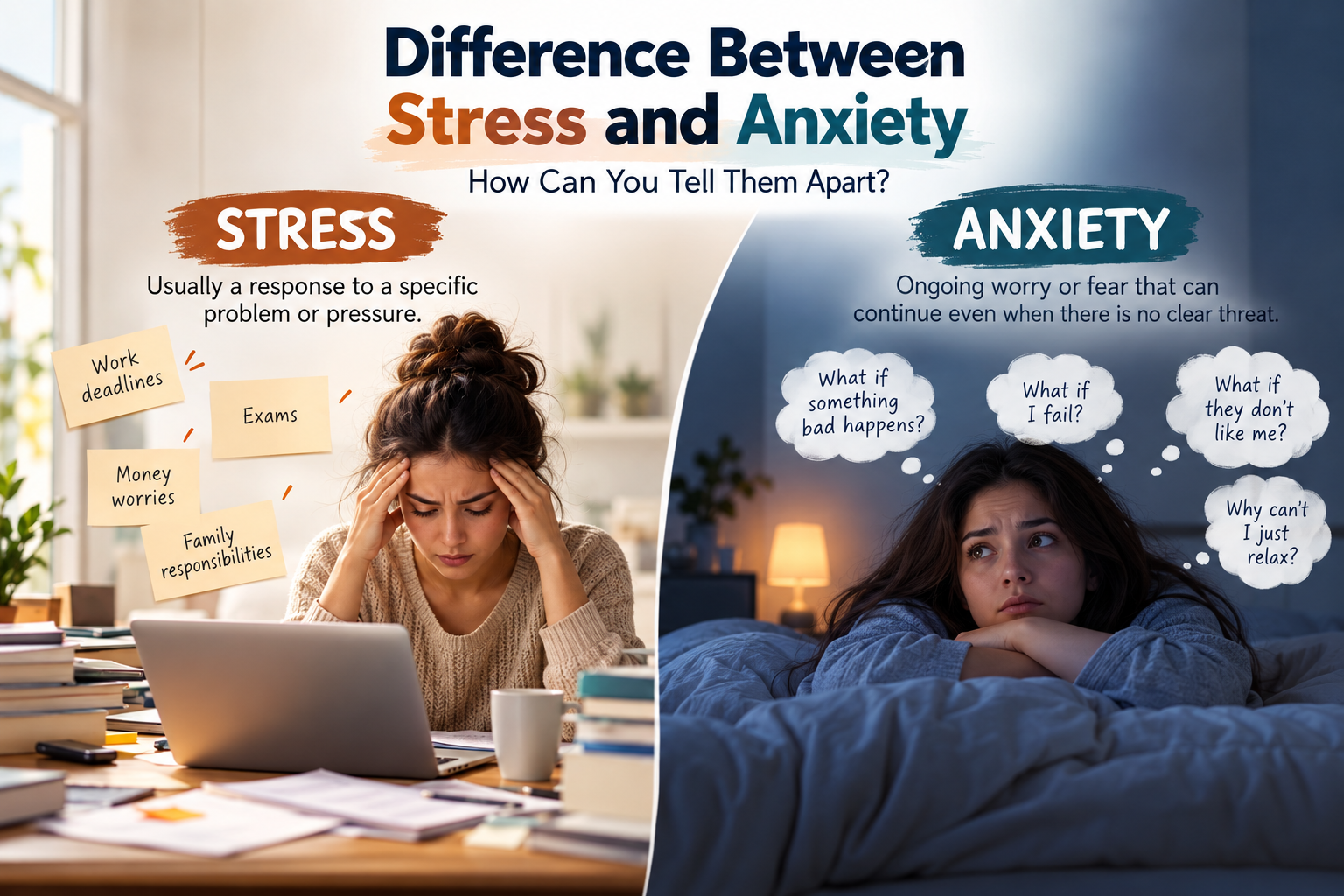
Stress and anxiety can feel almost the same.
Your heart may beat faster. You might have trouble sleeping. Your mind may keep jumping from one thought to another. You may feel tense, tired, irritated, or unable to focus.
Because the symptoms overlap, many people use the words “stress” and “anxiety” as if they mean the same thing. But they are not exactly the same.
The main difference between stress and anxiety is usually what causes the feeling and how long it lasts. Stress is often connected to an outside problem, such as work pressure, money worries, an upcoming exam, or relationship difficulties. Anxiety can continue even when there is no clear or immediate threat.
Understanding what you are experiencing can make it easier to decide what to do next.
In this guide, we’ll explain stress vs. anxiety in simple terms, look at their symptoms and causes, and discuss when it may be time to seek professional help.
What Is Stress?
Stress is your body’s natural response to pressure, change, or a difficult situation.
Imagine you have an important presentation tomorrow. You still have work to finish, you’re worried about making a mistake, and the deadline is getting closer.
You might feel tense or restless. Your heart may beat a little faster. You may find yourself thinking about the presentation when you’re trying to sleep.
That’s stress.
Your body is reacting to something it sees as a challenge or threat.
Stress is not always bad. In small amounts, it can actually be useful. It may give you the motivation and energy you need to finish a task, prepare for an exam, meet a deadline, or respond quickly to a problem.
The problem starts when stress becomes too intense or continues for a long time without enough rest or recovery.
Common Causes of Stress
- Stress can come from many parts of everyday life, including:
- School or college exams
- Financial problems
- Relationship difficulties
- Family responsibilities
- Moving to a new home
- Starting or losing a job
- Caring for someone
- Major life changes
- Health concerns
- Lack of sleep
In many cases, you can point to the reason you feel stressed.
You might say, “I’m stressed because I have three deadlines this week.”
Once those deadlines are over, the stress may begin to decrease.
What Is Anxiety?
Anxiety is a feeling of fear, worry, nervousness, or uneasiness.
Like stress, occasional anxiety is a normal part of life. You might feel anxious before a job interview, medical appointment, important conversation, or major decision.
But anxiety can sometimes continue even when there is no obvious danger in front of you.
For example, imagine your presentation is finished. It went well, and there is nothing else you need to do.
But your mind still won’t settle.
You start thinking:
“What if I said something wrong?”
“What if people thought I wasn’t good enough?”
“What if something goes wrong tomorrow?”
The original stressful situation is over, but the worry continues.
That is one way anxiety can feel different from ordinary stress.
Anxiety can also become strong enough to interfere with sleep, work, school, relationships, or everyday activities. When anxiety is persistent or difficult to control, speaking with a qualified mental health professional can help you understand what is happening.
What Is the Difference Between Stress and Anxiety?
The simplest difference between stress and anxiety is this:
Stress is usually a response to a specific external pressure, while anxiety may continue even when there is no immediate or clearly identifiable threat.
For example:
You have an exam on Friday and you’re worried because you haven’t studied enough. That is likely stress.
The exam ends, but you continue worrying for days about failing, disappointing people, or something bad happening. That may be anxiety.
However, the line between the two is not always perfect.
Stress can trigger anxiety, and anxiety can make stressful situations feel harder to manage. A person may also experience both at the same time.
Stress vs. Anxiety at a Glance
| Stress | Anxiety |
|---|---|
| Often has an identifiable cause | May happen without a clear cause |
| Usually connected to an outside pressure | Often involves ongoing fear or worry |
| May decrease when the problem ends | May continue after the situation has passed |
| Can sometimes improve motivation | Can make everyday tasks harder |
| Usually short-term, but can become chronic | Can be short-term or persistent |
| Often focused on a current problem | May focus heavily on future possibilities |
The most important point is not to label every uncomfortable feeling. Instead, pay attention to how often it happens, what seems to trigger it, and how much it affects your daily life.
Symptoms of Stress
Stress affects both the mind and body.
Emotional and Mental Symptoms of Stress
You may notice:
Irritability
Feeling overwhelmed
Difficulty concentrating
Racing thoughts
Frustration
Trouble making decisions
Feeling mentally exhausted
Constantly thinking about a problem
Physical Symptoms of Stress
Stress can also cause physical changes, such as:
Headaches
Muscle tension
Upset stomach
Faster heartbeat
Low energy
Trouble sleeping
Sweating
Changes in appetite
These symptoms often become stronger when the stressful situation becomes more intense.
Symptoms of Anxiety
Anxiety shares many symptoms with stress, which is why the two can be difficult to tell apart.
Emotional and Mental Symptoms of Anxiety
Common experiences include:
Excessive worry
Feeling nervous or on edge
Difficulty controlling worried thoughts
Fear that something bad will happen
Trouble concentrating
Restlessness
Repeated “what if?” thoughts
Avoiding situations because of fear
Physical Symptoms of Anxiety
Anxiety can also affect the body and may involve:
Rapid heartbeat
Sweating
Shaking or trembling
Muscle tension
Shortness of breath
Dizziness
Nausea or stomach discomfort
Difficulty sleeping
Feeling unusually tired
Some people may also experience panic attacks, which can involve an intense rush of fear along with strong physical symptoms.
Physical symptoms can have many possible causes, so new, severe, or concerning symptoms should not automatically be assumed to be anxiety.
Can Stress Turn Into Anxiety?
Stress and anxiety are different, but they can be closely connected.
Long periods of stress may leave you feeling constantly alert or worried. Your mind may become used to expecting another problem even when things are relatively calm.
For example, imagine you’ve been under pressure at work for several months.
Every morning brings another deadline. Emails keep arriving after work. You sleep poorly because you’re thinking about what needs to be done tomorrow.
Eventually, even on a quiet weekend, you may struggle to relax.
There is no urgent deadline, but your mind is still expecting something to go wrong.
This doesn’t mean that everyone experiencing chronic stress will develop an anxiety disorder. It simply shows why ongoing stress deserves attention rather than being ignored.
How Long Do Stress and Anxiety Last?
Another useful way to understand the difference between stress and anxiety is to look at how long the symptoms continue.
Stress often improves after the source of pressure is reduced or removed.
If your stress comes from an upcoming exam, for example, you may feel much calmer once the exam is finished.
Anxiety does not always follow that pattern.
The stressful event may end, but worry, fear, or physical symptoms can remain.
That doesn’t automatically mean you have an anxiety disorder. Temporary anxiety can happen to anyone.
However, if worry continues for weeks or months, feels difficult to control, or begins affecting your daily life, it may be worth discussing your symptoms with a mental health professional.
Is Anxiety More Serious Than Stress?
It isn’t helpful to think of one as automatically “more serious” than the other.
Both stress and anxiety can range from mild to severe.
Short-term stress may be uncomfortable but manageable. Chronic stress, however, can have a major effect on your sleep, mood, concentration, relationships, and overall well-being.
The same is true for anxiety.
Occasional anxiety is normal. Persistent or severe anxiety can interfere with everyday life and may require professional support.
Instead of asking which one is worse, ask:
How much is this affecting my life?
If stress or anxiety is stopping you from sleeping, working, studying, socializing, or doing normal activities, it deserves attention.
How to Know Whether You’re Stressed or Anxious
Try asking yourself a few simple questions.
Can I identify what is causing this feeling?
If there is a clear problem or pressure, stress may be playing a major role.
Does the feeling improve when the problem goes away?
If yes, it may be mainly stress.
Am I still worrying even though the situation is over?
Persistent worry after the original problem has passed may point more toward anxiety.
Do I avoid things because I’m afraid of what might happen?
Avoidance can sometimes be connected with anxiety.
Is this affecting my normal routine?
Pay attention if worry or stress is regularly interfering with sleep, work, school, relationships, or daily responsibilities.
These questions cannot diagnose an anxiety disorder, but they can help you better understand your experience.
How to Manage Everyday Stress
You cannot remove every stressful situation from your life, but you can change how you respond to some of them.
Identify What’s Causing the Stress
Start by asking yourself:
“What is putting the most pressure on me right now?”
Try to be specific.
Instead of saying, “Everything is stressful,” you might realize:
“I have too many tasks due this week.”
That gives you something concrete to work with.
Break Big Problems Into Smaller Steps
Large tasks often feel more stressful because your brain sees the entire problem at once.
Break the task into smaller actions.
Instead of:
“I need to finish this whole project.”
Try:
“I’ll work on the introduction for 30 minutes.”
Small steps can make a difficult situation feel more manageable.
Protect Your Sleep
Stress and poor sleep can feed each other.
Stress makes it harder to sleep, and lack of sleep can make everyday problems feel more overwhelming.
Try maintaining a regular sleep schedule and reducing stimulating activities close to bedtime.
Move Your Body
You don’t need an intense workout.
Walking, stretching, cycling, swimming, or another activity you enjoy can help support both physical and mental well-being.
Talk to Someone
Stress often feels heavier when you carry it alone.
Talking with a trusted friend, family member, counselor, or mental health professional can help you organize your thoughts and feel supported.
How to Manage Anxiety
Some of the same healthy habits that help with stress can also support anxiety management, but ongoing anxiety may need additional strategies.
Notice Your Thought Patterns
Anxiety often focuses on possibilities rather than what is actually happening.
For example:
“What if I fail?”
“What if everyone judges me?”
“What if something terrible happens?”
Try asking yourself:
“What evidence do I have that this will happen?”
This doesn’t mean ignoring real problems. It means separating possible outcomes from facts.
Use Slow Breathing
When you feel anxious, your breathing may become faster or shallower.
Slow, comfortable breathing can help your body move away from a heightened state of alert.
Try breathing in gently and then breathing out slowly. Avoid forcing very deep breaths if that makes you feel uncomfortable or light-headed.
Reduce Avoidance
Avoiding something that makes you anxious may provide temporary relief.
But repeated avoidance can sometimes make fear stronger because you never get the chance to learn that you can cope with the situation.
If anxiety is causing significant avoidance, a therapist can help you approach feared situations gradually and safely.
Consider Professional Support
If anxiety feels constant, overwhelming, or difficult to control, professional treatment may help.
Depending on your symptoms and needs, treatment may include psychotherapy, coping strategies, lifestyle changes, medication, or a combination of approaches.
A qualified provider can help determine what is appropriate for your situation.
When Should You Seek Professional Help?
You don’t need to wait until stress or anxiety becomes unbearable before asking for support.
Consider speaking with a healthcare or mental health professional if:
Worry feels difficult to control
Symptoms continue for weeks or months
- You frequently avoid normal activities because of fear
Sleep is regularly affected - Work or school performance is suffering
- Your relationships are being affected
- You experience frequent panic symptoms
- Stress feels constant rather than temporary
Getting an evaluation doesn’t automatically mean you have a mental health disorder.
It can simply help you understand what you’re experiencing and what kind of support may be useful.
If you’re in immediate danger or thinking about harming yourself or someone else, seek urgent help from local emergency services or a crisis service in your area.
Why Understanding the Difference Matters
Knowing the difference between stress and anxiety isn’t about putting a label on every difficult emotion.
It’s about understanding what your mind and body may be telling you.
Stress may be a sign that something in your life needs attention, rest, planning, or change.
Anxiety may signal that your worry or fear is continuing beyond the immediate situation and could benefit from additional support.
The sooner you recognize patterns in your thoughts, emotions, and physical symptoms, the easier it may be to choose an appropriate next step.
Final Thoughts: Stress vs. Anxiety
Stress and anxiety can look very similar, but there are important differences.
Stress usually has an identifiable source. You may be stressed about work, money, school, relationships, health, or another specific challenge. When the problem improves, the stress often decreases too.
Anxiety may continue even when there is no immediate threat or after the original stressful event has ended. It can involve persistent worry, fear, physical symptoms, and avoidance.
You can also experience stress and anxiety at the same time.
Rather than trying to diagnose yourself based on one symptom, look at the bigger picture: what triggers your feelings, how long they last, how intense they are, and whether they are interfering with your everyday life.
If stress or anxiety is becoming difficult to manage on your own, talking with a qualified mental health professional can be a useful next step.
Understanding the difference between stress and anxiety is a good first step, but knowing when your symptoms need extra support is just as important. If worry feels hard to control, keeps coming back, or starts affecting your sleep, work, or relationships, learning more about how to know if you need anxiety treatment can help you understand when it may be time to speak with a mental health professional.
Feeling overwhelmed by stress or anxiety? You don’t have to manage it alone. Contact NEH Psychiatry today to schedule an appointment and take the first step toward feeling more in control.
When should I talk to a mental health professional?
What treatments can help with anxiety?
What is the main difference between stress and anxiety?
Can you have stress and anxiety at the same time?
How do I know if I have anxiety or I'm just stressed?
Can stress cause anxiety?
Can stress and anxiety cause physical symptoms?
Does anxiety go away on its own?
Disclaimer: This article is for educational purposes only and is not a substitute for professional medical advice, diagnosis, or treatment. If stress or anxiety is affecting your daily life, speak with a qualified healthcare professional.
