

How to Know If You Need Anxiety Treatment
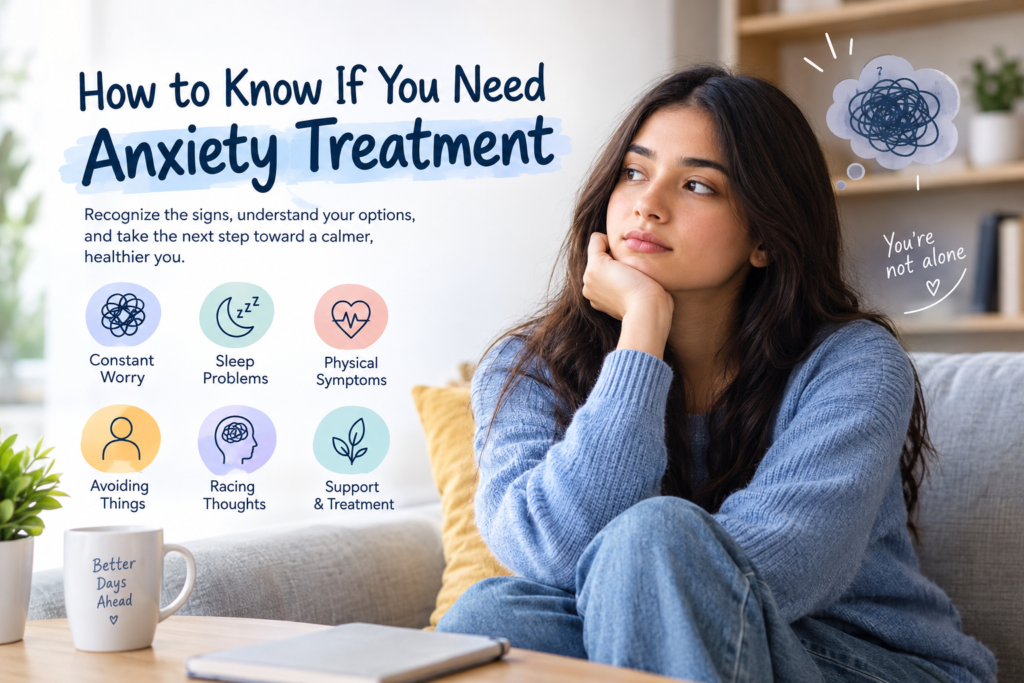
Feeling worried from time to time is a normal part of life. You may feel anxious before an exam, job interview, important meeting, or big life change. Usually, these feelings pass when the stressful situation is over.
But what happens when anxiety does not go away?
If you often feel worried, nervous, restless, or afraid even when there is no clear reason, it may be a sign that you need anxiety treatment. Anxiety can affect your thoughts, emotions, sleep, relationships, work, school, and everyday life.
The good news is that you do not have to manage severe or ongoing anxiety on your own. With the right support, many people learn to manage their symptoms and feel more in control of their lives.
What Is Anxiety?
Anxiety is your body’s natural response to stress or danger. It can prepare you to deal with a difficult situation.
For example, it is normal to feel nervous before giving a presentation or meeting someone for the first time.
However, anxiety can become a problem when it happens too often, feels too strong, or starts interfering with your daily life.
Common signs of anxiety may include:
- Constant worrying
- Feeling nervous or on edge
- Racing thoughts
- Trouble relaxing
- Difficulty sleeping
- Fast heartbeat
- Sweating or shaking
- Feeling restless
- Trouble concentrating
- Avoiding certain people or situations
- Feeling afraid that something bad will happen
You do not need to have every symptom to benefit from professional support.
How Do You Know If You Need Anxiety Treatment?
There is no single sign that tells everyone they need treatment. A useful question is:
Is anxiety making it harder for me to live the life I want?
If anxiety is affecting your daily activities, relationships, work, school, sleep, or ability to enjoy life, talking with a mental health professional may be helpful.
Here are some common signs that it may be time to seek anxiety treatment.
1. Your Worry Feels Constant
Everyone worries sometimes. But if your mind seems to be worrying all day, it can become exhausting.
You may worry about your health, family, money, work, relationships, or things that have not even happened yet.
You might tell yourself, “I know I’m worrying too much, but I can’t stop.”
If worry feels difficult to control most days, professional support may help you understand what is causing it and learn healthier ways to manage it.
2. Anxiety Is Affecting Your Daily Life
Anxiety becomes more concerning when it starts getting in the way of normal activities.
For example, you may:
- Avoid going to work or school
- Stop attending social events
- Have trouble completing everyday tasks
- Avoid making phone calls
- Find it difficult to leave home
- Struggle to focus on important work
- Avoid situations because you are afraid of feeling anxious
When anxiety changes what you can or cannot do, it may be time to consider treatment.
3. You Are Avoiding Things You Used to Enjoy
Avoidance can feel like an easy solution.
If something makes you anxious, staying away from it may give you temporary relief. But over time, avoiding more and more situations can make anxiety harder to manage.
You might stop meeting friends, traveling, exercising, attending events, or trying new things.
If anxiety is causing you to give up activities that once mattered to you, talking with a professional can be a useful step.
4. Your Sleep Is Getting Worse
Anxiety and sleep problems often go together.
You may lie awake thinking about everything that could go wrong. You might wake up during the night with racing thoughts or feel tired even after spending enough time in bed.
Poor sleep can then make anxiety feel worse the next day.
If anxiety regularly makes it difficult to sleep, it is worth discussing with a healthcare professional.
5. You Experience Physical Symptoms
Anxiety does not only affect your thoughts. It can also affect your body.
Some people experience:
- A racing heart
- Muscle tension
- Headaches
- Sweating
- Shaking
- Stomach problems
- Shortness of breath
- Feeling dizzy
- Feeling tired
These symptoms can have many possible causes, so it is important not to assume that they are always caused by anxiety. A healthcare professional can help you understand what may be happening.
6. You Have Panic Attacks
A panic attack can happen suddenly and may feel frightening.
You may experience a racing heartbeat, sweating, shaking, chest discomfort, dizziness, shortness of breath, or a strong feeling that something terrible is happening.
Some people begin avoiding places where they previously experienced a panic attack because they are afraid it will happen again.
If you are having repeated panic attacks or changing your life because of fear of another attack, professional help may be useful.
Important: Some symptoms of panic attacks, especially chest pain or severe breathing problems, can also occur with medical emergencies. If symptoms are severe, new, or concerning, seek urgent medical care rather than assuming they are anxiety.
7. You Are Constantly Looking for Reassurance
Do you repeatedly ask other people if everything is okay?
Do you search your symptoms online again and again because you are afraid something is wrong?
Do you need someone to reassure you before you can relax?
Repeated reassurance can sometimes become part of the anxiety cycle. If you feel unable to feel safe without checking or asking others, a mental health professional can help you understand the pattern.
8. Anxiety Is Affecting Your Relationships
Anxiety can affect the way you communicate and connect with other people.
You may become withdrawn, easily irritated, overly worried about what others think, or afraid of being judged.
You may also cancel plans or avoid conversations because they make you uncomfortable.
If anxiety is creating repeated problems in your relationships, treatment can help you develop healthier ways to respond to anxious thoughts and situations.
9. You Have Tried to Manage Anxiety on Your Own, But It Is Not Enough
There are many things you can try at home, such as exercising, improving sleep, practicing relaxation, reducing caffeine, or talking with someone you trust.
These habits can be helpful.
But sometimes anxiety continues even when you are doing your best to manage it.
If you have tried several strategies and still feel overwhelmed, reaching out to a mental health professional does not mean you have failed. It simply means you may need additional support.
10. Anxiety Is Making You Feel Out of Control
One of the clearest signs that you may need help is feeling like anxiety is controlling your life instead of the other way around.
You may feel like you cannot stop worrying, cannot relax, or cannot make decisions without fear.
You do not have to wait until anxiety becomes severe before asking for help.
Getting support early can give you more tools to understand and manage your symptoms.
What Does Anxiety Treatment Involve?
Anxiety treatment depends on your symptoms, needs, medical history, and personal goals.
A mental health professional may recommend one or more approaches.
Therapy
Therapy can help you understand anxious thoughts and learn new ways to respond to them.
Cognitive behavioral therapy (CBT) is one commonly used approach for anxiety. It can help you identify unhelpful thought patterns and develop healthier responses.
Medication
For some people, medication may be part of their treatment plan. A qualified healthcare professional can discuss whether medication may be appropriate based on your symptoms and health history.
Do not start, stop, or change psychiatric medication without speaking with the prescribing healthcare professional.
Lifestyle Changes
Healthy daily habits can also support anxiety management.
These may include:
- Getting regular sleep
- Exercising regularly
- Eating balanced meals
- Limiting excessive caffeine
- Practicing relaxation techniques
- Staying connected with supportive people
- Taking breaks from stressful activities
Lifestyle changes may support treatment, but they are not a replacement for professional care when anxiety is significantly affecting your life.
Can Anxiety Go Away Without Treatment?
Sometimes anxiety related to a short-term stressful situation improves when the situation changes.
However, ongoing anxiety may not simply disappear on its own.
If anxiety continues for weeks or months, becomes stronger, or interferes with your daily life, talking with a mental health professional can help.
You do not have to wait until your anxiety becomes severe before seeking support.
When Should You Talk to a Mental Health Professional?
Consider speaking with a mental health professional if:
- Anxiety happens frequently
- You cannot control your worrying
- Anxiety affects your sleep
- You avoid important activities
- You experience repeated panic attacks
- Anxiety affects your work or school
- Your relationships are being affected
- You feel overwhelmed by anxious thoughts
- Self-help strategies are not providing enough relief
A professional can listen to your concerns, ask about your symptoms, and help determine what type of support may be appropriate.
How Is an Anxiety Disorder Diagnosed?
A mental health professional may ask about your symptoms, how long they have been happening, what triggers them, and how they affect your everyday life.
They may also ask about your medical history, medications, sleep, stress, and other mental health symptoms.
There is no single blood test that can diagnose every anxiety disorder. Diagnosis usually involves a professional assessment and understanding the full picture of your symptoms.
Because some physical health conditions can cause symptoms that look like anxiety, a healthcare professional may also recommend a medical evaluation when appropriate.
What Happens If You Ignore Severe Anxiety?
Ignoring anxiety does not always make it worse, but ongoing untreated anxiety can continue to interfere with daily life.
You may start avoiding more situations, sleeping poorly, withdrawing from others, or spending more time worrying.
Some people also use unhealthy coping methods to deal with overwhelming anxiety.
Getting professional support can help you understand what is happening before anxiety takes up even more space in your life.
How to Take the First Step Toward Anxiety Treatment
Asking for help can feel uncomfortable, especially if you have never talked with a mental health professional before.
You do not need to have all the answers before making an appointment.
Start by writing down:
- What symptoms you are experiencing
- How often they happen
- When they started
- What situations make them worse
- How anxiety affects your daily life
- Any medications or supplements you currently take
- Questions you want to ask your provider
This information can make your first conversation easier.
Remember, asking for help is not a sign of weakness. It is one way of taking care of your mental health.
Final Thoughts
Anxiety is a normal human emotion, but it should not have to control your everyday life.
If you constantly worry, avoid activities, struggle with sleep, experience panic attacks, or feel that anxiety is affecting your relationships, work, school, or overall well-being, it may be time to talk with a mental health professional.
Anxiety treatment can give you practical tools and professional support to better understand your symptoms and move forward.
You do not have to figure everything out at once. The first step can simply be talking to someone who can help.
NEH Psychiatry in Oak Creek, WI, can help you explore your symptoms and discuss appropriate treatment options.
How do I know if my anxiety is serious enough for treatment?
Is therapy enough to treat anxiety?
What is the most common therapy for anxiety?
Can anxiety cause physical symptoms?
Should I see a therapist or psychiatrist for anxiety?
When should I seek urgent help for anxiety?
Can lifestyle changes reduce anxiety?
Disclaimer: This article is for general educational purposes only and is not a substitute for professional medical advice, diagnosis, or treatment. Every person’s mental health needs are different. If you have concerns about your mental health or symptoms, speak with a qualified mental health professional for personalized guidance.
