

How to Prepare for an Alcohol Assessment
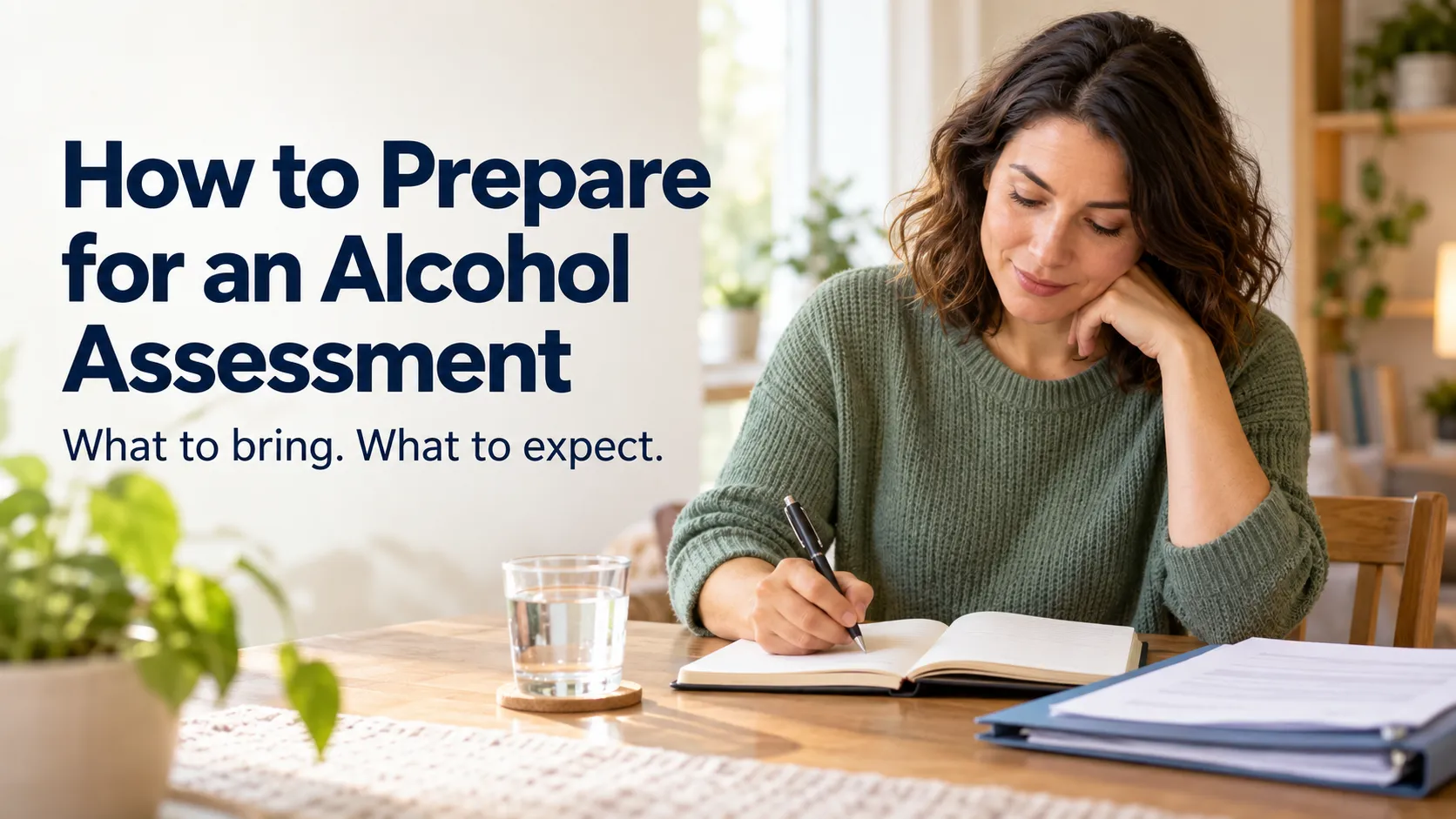
To prepare for an alcohol assessment, write down what you usually drink, how often you drink, and any changes you’ve noticed in your health or daily life. Bring a list of your medicines, any health records the office requests, and questions about treatment or support. You don’t need exact answers to everything; honest estimates are useful. If you’ve felt shaky, sweaty, or unwell after going without alcohol, tell a healthcare professional before trying to stop. Getting these details together gives you a clear starting point for the appointment.
It’s understandable to feel uneasy about discussing your drinking. You may be worried about what the provider will think or find it hard to explain what has been happening. A few notes can help you get started, especially if you tend to forget things when you’re nervous. The visit is a chance to understand your health and talk about the help you may need.
What Is an Alcohol Use Assessment?
An alcohol use assessment is a health visit that looks at your drinking and its effects. A healthcare professional asks about your habits, symptoms, medical history, and daily life. They use this information to work out whether there are health concerns and what kind of care could help.
The conversation usually goes beyond the number of drinks you have. Your sleep, mood, relationships, and home situation may also be discussed. According to the National Institute on Alcohol Abuse and Alcoholism (NIAAA), a full assessment should consider physical health, mental health, and social support when planning care.
You don’t need to know whether you have alcohol use disorder before making an appointment. You can seek help simply because something about your drinking worries you.
This guide focuses on a clinical assessment for health and treatment. A court-required alcohol evaluation may involve different paperwork, rules, and provider requirements.
Write Down What Your Drinking Looks Like
Start with a typical week. Think about which days you drink, what you have, and roughly how much. Include days when you drink more than usual, even if they don’t happen often.
For example, “I drink beer” gives the provider some information. “I have two large cans after work most days, and sometimes more on Saturday” gives a clearer picture. If your habits have changed recently, note when the change started.
Useful details to record include:
- The type and size of your drinks.
- How many days a week you drink.
- How much you usually have at one time.
- Whether you sometimes drink more than planned.
- When you last had alcohol.
You may find it easier to remember how long a bottle lasts than how many glasses you pour. Share that information if it helps. You don’t have to turn a rough memory into an exact number.
There’s also no need to delay your appointment so you can collect several weeks of notes. Bring what you know, and let the provider help fill in the gaps.
Why Drink Size Matters
A large glass of wine or a strong beer can contain more alcohol than one standard drink. That can make “two drinks” mean different things from one person to another.
In the United States, a standard drink is about 12 ounces of beer at 5% alcohol, 5 ounces of wine at 12%, or 1.5 ounces of spirits at 40%. everything yourself. Write down the bottle size and alcohol strength, or take a photo of the label. The provider can help you understand the amount.
Think About What Made You Seek Help
Your reason for booking the visit deserves a place in the conversation. Perhaps you’re tired of waking up with a headache. Maybe your partner is worried, or you’ve noticed that keeping to one drink is harder than it used to be.
Write down two or three examples from your own life. “I missed work after drinking” or “I feel anxious the next morning” is easier to discuss than a broad statement such as “Things aren’t going well.”
Consider your sleep, energy, mood, memory, and relationships. Mention any injuries or evenings you can’t fully remember. You don’t have to know whether alcohol caused every change. Just explain what you’ve noticed.
It can also help to describe what happens before you drink. You might reach for alcohol when you feel stressed, lonely, or unable to sleep. These details give the provider a better sense of your needs.
Gather Your Medicine and Health Information
Make a list of the medicines you take, including the dose if you know it. Add vitamins, supplements, sleep aids, and medicines you buy without a prescription. If remembering the names is difficult, a current pharmacy list can help.
Tell the provider about other substances you use, including cannabis or medicines that weren’t prescribed to you. This information matters when deciding which care options are safe.
Include any health conditions, past hospital visits, and previous alcohol treatment. You should also mention concerns such as anxiety, low mood, pain, or poor sleep. These may need attention alongside your drinking.
Don’t change or stop a prescribed medicine just to prepare for the appointment. If you’re unsure what to take before the visit, ask the office or the person who prescribed it.
Tell the Provider About Past Attempts to Cut Down
If you’ve tried to change your drinking before, think about what happened. You may have stopped for a few weeks, found certain days harder, or started drinking again during a stressful period.
Explain what helped and what got in the way. Perhaps regular counseling was useful, but the cost became difficult. Maybe cravings were strongest in the evening, or you didn’t have anyone you felt comfortable calling.
These details can make the next plan more useful. You don’t need to describe a past attempt as a failure.
If you’ve never tried to cut down, say that too. The provider can talk with you about your concerns, your goals, and how to approach change safely.
Ask for Advice Before Stopping if You May Have Withdrawal
Some people feel unwell when they stop drinking or sharply reduce the amount. Symptoms can include shaking, sweating, nausea, anxiety, or a racing heartbeat. Tell the provider if this has happened to you, especially if you’ve used alcohol to make those feelings go away.
If you may be physically dependent on alcohol, get medical advice before suddenly stopping or cutting down. Don’t try to manage withdrawal alone to get ready for the assessment.
Mention any past withdrawal seizures, severe confusion, hallucinations, or hospital care. The provider needs to know about these experiences when reviewing your safety.
If you’re having a seizure, severe confusion, or seeing or hearing things that aren’t there after reducing alcohol, seek emergency medical care. Don’t wait for a scheduled visit or drive yourself. The NHS explains the risks and symptoms of alcohol withdrawal.
What to Bring to an Alcohol Assessment
When deciding what to bring to an alcohol assessment, focus on information that will help the conversation and any paperwork the office needs.
A simple checklist includes:
- Notes about your drinking and symptoms.
- A current medicine and supplement list.
- Questions you want to ask.
- Relevant health records, if requested.
- Identification, insurance details, or referral forms, if needed.
Call ahead if you’re unsure about the office’s requirements. Ask whether forms should be completed before the appointment and whether records need to be sent in advance.
You don’t need a large folder of paperwork to ask for help. If a record is missing, tell the staff and ask how to get it. Keep your main concerns easy to find so they don’t get lost among the forms.
Common Alcohol Use Assessment Questions
Knowing some common alcohol use assessment questions can make the visit feel more familiar. The exact questions will depend on the provider and your situation, but they may include:
- How often do you drink alcohol?
- How much do you usually drink?
- Do you sometimes have more than you intended?
- Have you tried to stop or cut down?
- Do you have strong urges to drink?
- Has alcohol affected your work or relationships?
- What happens when you go without alcohol?
The provider may ask about recent weeks and patterns over the past year. Explain if your drinking has changed during that time.
You might also complete a short screening form. Screening can show whether a closer review is needed, but it does not replace the whole assessment.
If you don’t understand a question, ask for an example. It’s fine to take a moment before answering.
How to Talk About Things That Feel Difficult
It can be hard to give an honest answer when you feel embarrassed. You might want to leave out a heavy drinking day or avoid talking about an argument. Try to share those details as clearly as you can, because they can affect your care.
You can begin with, “I’m nervous about saying this,” or “I wrote it down because I thought I might struggle to explain.”
Handing over your notes is also an option. You don’t have to tell the whole story without help.
If you can’t remember something, give your best estimate and say that you’re unsure. If you remember more later, correct your answer. The conversation can develop as you become more comfortable.
Questions to Ask About Treatment and Support
Your appointment should include time for your questions. Think about what you need to understand before you feel ready to take the next step.
You could ask:
- What do my symptoms suggest?
- Will I need medical help to stop safely?
- What treatment options might help?
- Could medicine be suitable for me?
- Can care also address my mood or sleep?
- Who can I contact between appointments?
- What should I do if I drink again during treatment?
Bring up practical concerns too. Work hours, transport, childcare, and cost can affect what you’re able to do. It’s better to discuss these than leave with a plan you already know will be hard to follow.
Get Ready for the Day of Your Visit
Check the appointment time, location, and instructions from the office. Keep your notes and paperwork together, and allow enough time so you don’t arrive feeling rushed.
If you want someone to come with you, ask the office first. A trusted person may help you remember information, but you can also request time alone with the provider.
For a video visit, choose a private place and check your connection beforehand. Keep your medicine list and questions within reach.
Arrange safe transport for an in-person appointment. Don’t drive if you’ve been drinking or feel impaired. Contact the office for guidance if you’re unsure whether you can attend safely.
What Happens After the Assessment?
The provider may explain the findings and suggest a care plan. Sometimes another visit, health records, or tests are needed before the next steps are clear.
Care may include counseling, medicine, peer support, further health checks, or a referral. Some people need medical support for withdrawal. An assessment does not automatically mean entering residential treatment.
Before leaving, make sure you understand what happens next. Ask when to follow up, who to call with questions, and what to do if you feel worse. Write the answers down if that helps.
Take Your Questions With You
Learning how to prepare for an alcohol assessment starts with gathering a few useful details about your life. Bring your notes, explain your concerns, and ask about anything you don’t understand. You don’t need perfect answers to have a useful conversation.
Visit Nuestra Esperanza Health’s alcohol use disorder treatment page to learn about care, then contact the practice about appointment options and preparation instructions.
Frequently Asked Questions
How long does an alcohol assessment take?
Should I stop drinking before an alcohol assessment?
What if I don’t remember how much I drink?
Can I bring a family member or friend?
Will I need blood tests?
Is a clinical assessment the same as a court evaluation?
Disclaimer: This article provides general information and is not a substitute for professional medical advice, diagnosis, or treatment. ADHD affects people differently, and the strategies discussed may not work for everyone. If attention difficulties are affecting your work or daily life, speak with a qualified healthcare professional. Do not stop or change prescribed medication without consulting your prescriber.
